Written in Bangkok, Thailand – reflecting while already on my next adventure.
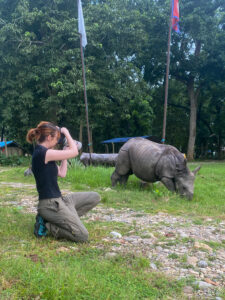
My heart definitely skipped a beat the first time I saw a greater one-horned rhinoceros. It was my very first night in Chitwan, Nepal while I was having dinner in my hotel and I couldn’t believe what I saw when I saw this HUGE rhino casually walking into the street. I later learned he was his daily trek to the rice fields, so as time passed I began to be very aware of this particular rhino’s schedule.
What a sight to see on my very first night! After all, this behavior is exactly what I was intending to study. This tendency for large, dangerous wildlife to approach human settlements and the devastating fallout that hurts all sides. These negative interactions are all too frequent in Chitwan – farmers make up the vast majority of people living in the buffer zone outside the national park and lots of animals like to take advantage of easy food sources like rice fields or grazing livestock. This obviously creates conflict, as farmers are losing valuable stock and both wildlife and humans often get hurt in the backlash. I used to hear stories every couple weeks about another attack resulting in serious injury or death.
Rhinos specifically were major offenders of these serious cases. When you see them in person, you realize they are incredibly majestic, but also built like military tanks. They are hefty (up to 2,500 kg), and have thick folded skin that makes it have a plated “armor” appearance. Witnessing these giants up close was surreal, but also incredibly intimidating.
And yet, after over three months of independent research here, I learned that rhinos weren’t just wonders of evolution; they were neighbors, and living symbols of resilience and a testament to Nepal’s conservation journey.
A little background about this extraordinary species in Nepal: By the 1960s, fewer than 100 greater one-horned rhinos survived in the country. Their numbers dwindled mainly due to rampant poaching driven by the illegal demand for rhino horns and widespread habitat loss as forests and grasslands were converted for agriculture and settlements. This dire situation pushed the rhino population dangerously close to extinction in Nepal.
Today, thanks largely to community-based anti-poaching initiatives and collaborative conservation efforts led by organizations like the National Trust for Nature Conservation (NTNC) and the community buffer zone leadership, their numbers have rebounded impressively to around 750. Programs like the Buffer Zone User Committees empower local communities by involving them directly in protection, management, and sharing benefits from tourism and conservation activities. Additionally, dedicated anti-poaching patrols, alternate income generation training, and strict legal enforcement have been critical in reducing illegal hunting. Rhino monitoring, habitat management, and educational outreach are also vital components of this multi-faceted conservation strategy. This success is a beacon of hope, showing what targeted protection and local involvement can achieve.
Yet, this recovery brings its own set of challenges. Rhinos are keystone grazers, meaning their presence shapes the ecology of their habitat by maintaining the grasslands that numerous species depend on. However, like I mentioned, living so close to human settlements sometimes stirs conflict. Crop damage and risks to human safety test the bonds of coexistence. Balancing these realities requires ongoing dialogue, vigilant protection, and innovative solutions that protect both wildlife and people.
Living amid these magnificent creatures altered my understanding of what “wild” truly means. It’s not just an untouched wilderness. It’s a dynamic space where humans and wildlife share challenges. Seeing rhinos roam freely near villages every day was a powerful reminder: conservation is not just about saving animals but about fostering coexistence, respect, and hope for the future.
Now sitting here in Bangkok, Thailand, reflecting on this incredible adventure, I carry with me a renewed appreciation for the complicated beauty of conservation.